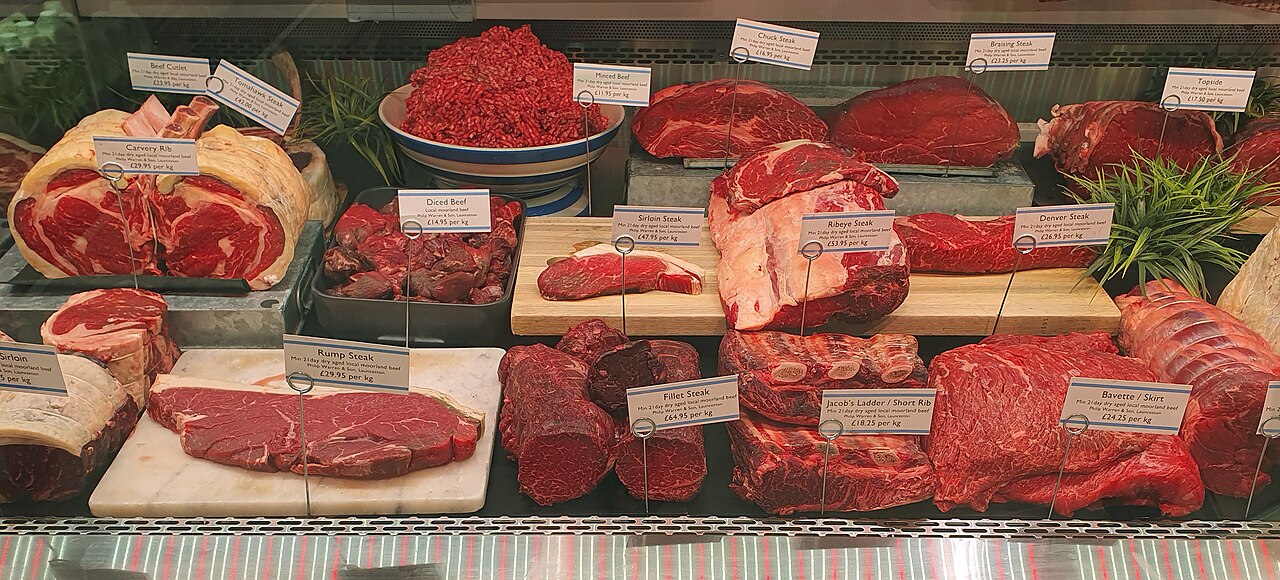
Stand at the meat case this holiday weekend and you will see the same cut of beef wearing two or three different prices, sometimes dollars apart per pound. The difference usually comes down to one small word on the label: Prime, Choice or Select. Those words are not marketing. They are official grades assigned under standards set by the U.S. Department of Agriculture, and they tell you something specific about the steak before you ever put it on the grill.
Knowing what the grades measure, and just as important what they do not measure, lets you match the meat to the meal instead of paying top dollar out of habit. Here is how the system works.
Grades measure eating quality, not safety
The first thing to understand is that a grade is not a safety stamp. Federal inspection for wholesomeness is mandatory for all meat sold in stores, while grading for quality is a separate, voluntary program, as the USDA’s Food Safety and Inspection Service explains in its Beef From Farm to Table guide. Packers choose to have their beef graded and pay a fee for the service. An ungraded package at the store is not unsafe; it simply was not submitted for grading or did not earn a grade worth advertising.
Quality grades are assigned by trained USDA graders using the official beef standards maintained by the Agricultural Marketing Service. The graders evaluate two things above all: marbling, meaning the flecks of fat interspersed within the lean meat, and the maturity of the animal. More marbling in a young animal generally means a more tender, juicy and flavorful result. Beef is also assigned yield grades, which measure the amount of usable lean meat on a carcass, but those matter mostly to the industry rather than to shoppers.
What Prime actually gets you
Prime is the top of the scale. According to the USDA’s own explainer on beef grades, Prime beef comes from young, well-fed cattle and has abundant marbling. Much of it goes to restaurants and hotels, which is why the Prime section of a supermarket case is often small. Prime roasts and steaks shine with dry-heat cooking: broiling, roasting or grilling. If you are paying the Prime premium, this is the beef for the occasions when the meat is the whole show and you plan to cook it hot and fast.
Choice: the workhorse grade
Choice is still high-quality beef, just with less marbling than Prime. USDA guidance notes that Choice roasts and steaks from the loin and rib will be very tender, juicy and flavorful and are well suited for dry-heat cooking. The practical takeaway for a grocery budget: for a rib-eye or strip steak headed to the grill, Choice usually delivers most of the eating experience of Prime at a lower price. Less tender Choice cuts, such as those from the round or chuck, do better braised or simmered with a little liquid in a covered pan.
Select: leaner, cheaper, less forgiving
Select beef is uniform in quality and normally leaner than the higher grades. It is fairly tender, but with less marbling it can lack some of the juiciness and flavor of Prime and Choice, and it gives you a narrower margin for error at the stove. The USDA’s advice is that only the tender cuts of Select should be cooked with dry heat, and other cuts should be marinated first or braised. Select is a sensible buy for marinated fajitas, stews and slow-cooked dishes, where the cooking method supplies the moisture the marbling would have.
The grades you never see on a label
The scale does not stop at Select. Standard and Commercial grades are frequently sold as ungraded beef or under a store brand name, which is worth remembering when a package carries no grade shield at all. The lowest grades, Utility, Cutter and Canner, are seldom if ever sold at retail as cuts; they typically go into ground beef and processed products instead. So an unlabeled package is not a mystery box, but it is usually not secretly Choice either.
How to shop the case like the grades intend
A few practical rules fall out of all this. First, look for the actual USDA grade shield rather than words that merely sound like grades; terms such as “butcher’s reserve” or “premium cut” are store language, not USDA grades. Second, match the grade to the cooking method: pay up for Prime or high-end Choice when you are grilling or roasting a tender cut, and save money with Select or ungraded beef when the recipe involves a marinade, a braise or a slow cooker. Third, remember that grade and cut work together. A Select tenderloin will still be more tender than a Prime chuck roast; the grade refines your expectation within a cut, it does not override the cut itself.
None of this requires memorizing charts. The whole grading system exists to compress a professional evaluation into one word you can read in two seconds at the meat case. Once you know that the word is really a marbling forecast, and that the safety question was already settled by mandatory inspection before the beef ever reached the store, the price differences in the case stop being confusing and start being useful information.

Leave a Reply